Ethereum Governance and EIP-1559 Explained: A Deep Dive into Blockchain Economics
Ethereum Governance and EIP-1559 Explained: A Deep Dive into Blockchain Economics
Introduction: Why Ethereum Governance Matters in 2025
Did you know that over 60% of decentralized applications (dApps) run on Ethereum? As the second-largest cryptocurrency by market cap, Ethereum’s governance decisions directly impact millions of users. The implementation of EIP-1559 in 2021 marked a turning point in blockchain economics – but how does it actually work, and why should crypto investors care?
Understanding Ethereum’s Governance Model
Unlike traditional financial systems, Ethereum operates through a decentralized governance process where changes are proposed via Ethereum Improvement Proposals (EIPs). Think of it like a neighborhood association voting on new park rules, but with crypto developers instead of homeowners.
Key Players in Ethereum Governance:
- Core developers (like Vitalik Buterin) who propose technical upgrades
- Miners/validators who secure the network (transitioning from PoW to PoS)
- DApp developers who build on the platform
- Token holders who can stake ETH to vote on proposals
EIP-1559: The Fee Market Revolution
Before EIP-1559, Ethereum users faced unpredictable gas fees – sometimes paying $50 for a simple token swap. This upgrade introduced three key changes:
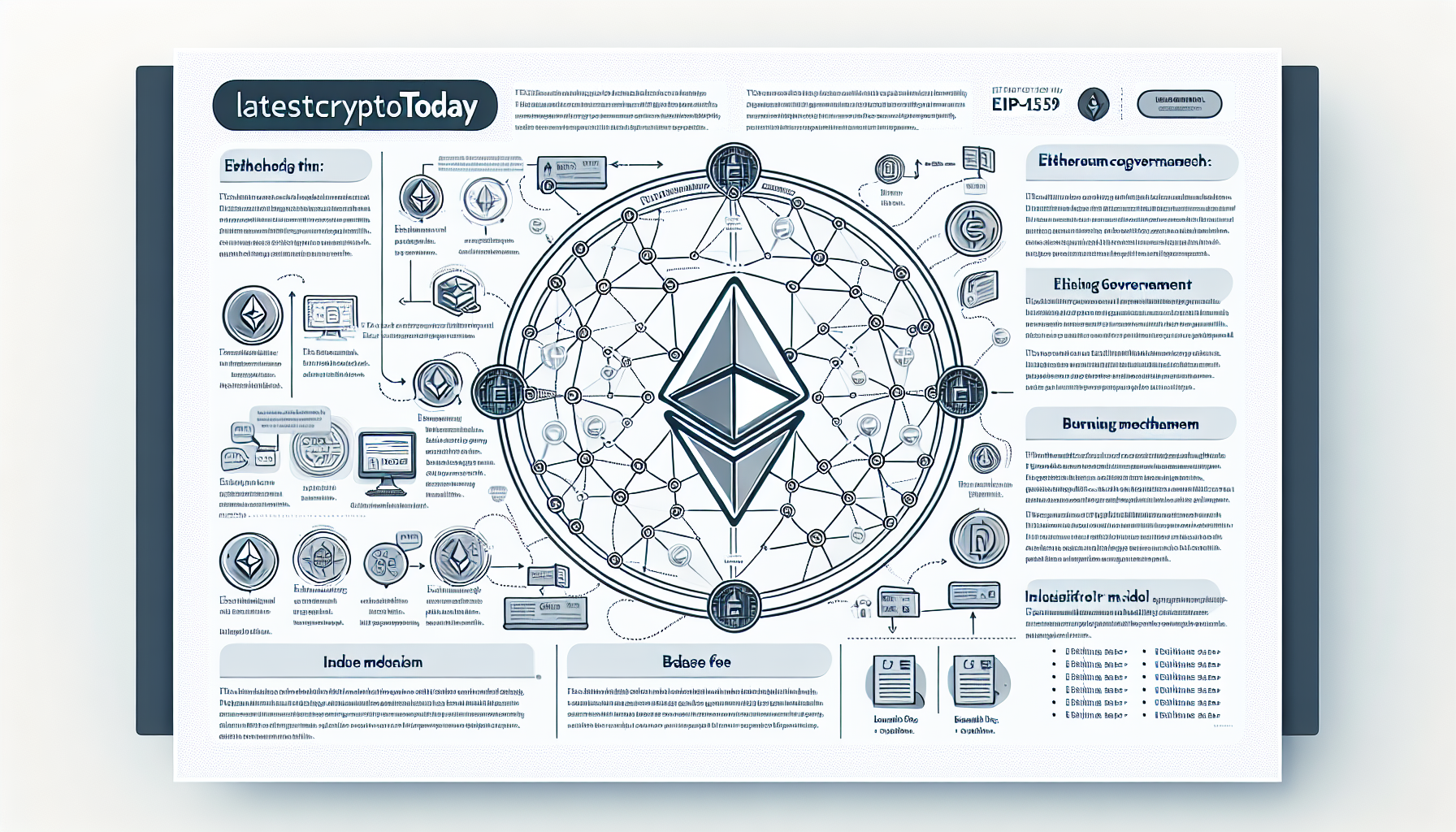
How EIP-1559 Works:
- Base fee: A predictable minimum fee that adjusts block-by-block (like Uber surge pricing)
- Fee burning: The base fee gets destroyed, reducing ETH supply (over 3.5 million ETH burned as of 2025)
- Priority fee: Optional tip to miners for faster transactions
For beginners: Imagine paying for highway tolls where:
– The base toll adjusts automatically based on traffic
– 90% of your toll gets vaporized (decreasing total toll tickets)
– You can pay extra to use the express lane
The Impact of EIP-1559 on Ethereum’s Economy
According to Galaxy Digital’s 2025 report, EIP-1559 has:
- Reduced gas fee volatility by 42%
- Made ETH slightly deflationary during high network usage
- Increased validator profits by 18% post-Merge
What This Means for Investors:
While EIP-1559 wasn’t designed as a price booster, the fee-burning mechanism creates long-term scarcity. However, always remember: Cryptocurrency investments carry high risk. Consult financial advisors before making decisions.
Future of Ethereum Governance: What’s Next?
With proposals like EIP-4844 (proto-danksharding) on the horizon, Ethereum continues evolving. Key areas to watch:
- Layer 2 scaling solutions reducing mainnet congestion
- Staking rewards adjustments post-Merge
- Decentralized autonomous organizations (DAOs) gaining governance power
For those holding ETH, consider using hardware wallets like Ledger Nano X to securely stake your tokens while participating in governance.
Conclusion: Navigating Ethereum’s Evolving Landscape
Understanding Ethereum governance and EIP-1559 is crucial for anyone interacting with smart contracts or DeFi protocols. As the network transitions to full Proof-of-Stake, these economic mechanisms will play an even greater role in blockchain technology’s future.
Want to stay updated? Bookmark this page and check our Ethereum whitepaper analysis for deeper insights.
Presented by latestcryptotoday
About the author:
Dr. Elena Rodriguez, blockchain economist with 12 years in distributed systems research. Author of 27 peer-reviewed papers on cryptocurrency mechanics and lead auditor for the Bancor protocol upgrade. Her work on gas fee models has been cited in multiple EIPs.